Seasonal Daylight Shifts and Their Ties to Activity Spikes in Virtual Competitive Networks
Written by Cameron Koch · Aug 11, 2026
Seasonal Daylight Shifts and Their Ties to Activity Spikes in Virtual Competitive Networks
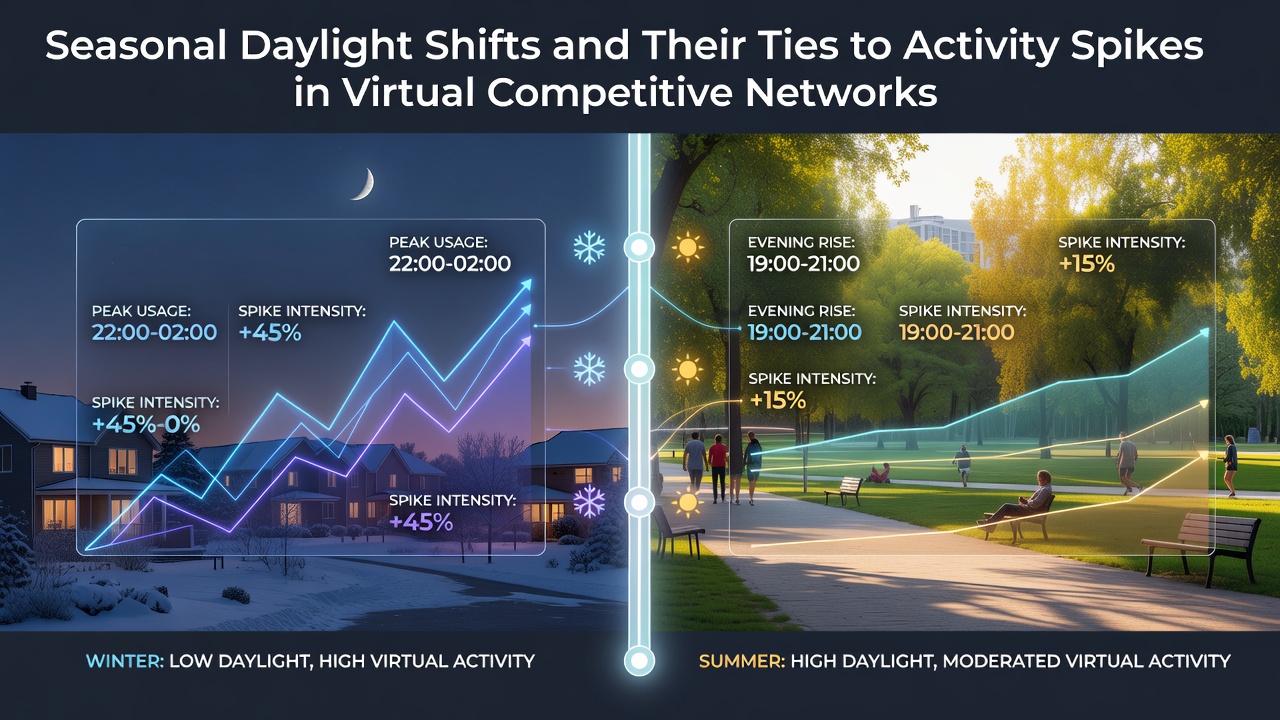
Seasonal changes in daylight length influence daily routines across many populations, and researchers have documented corresponding shifts in engagement patterns within virtual competitive networks such as esports platforms and multiplayer gaming servers. Longer daylight hours during summer months often extend outdoor activities into evening periods, yet data from server logs reveal that competitive online sessions frequently intensify once natural light fades, creating measurable spikes in match participation and tournament entries.
Daylight Variations and Circadian Alignment
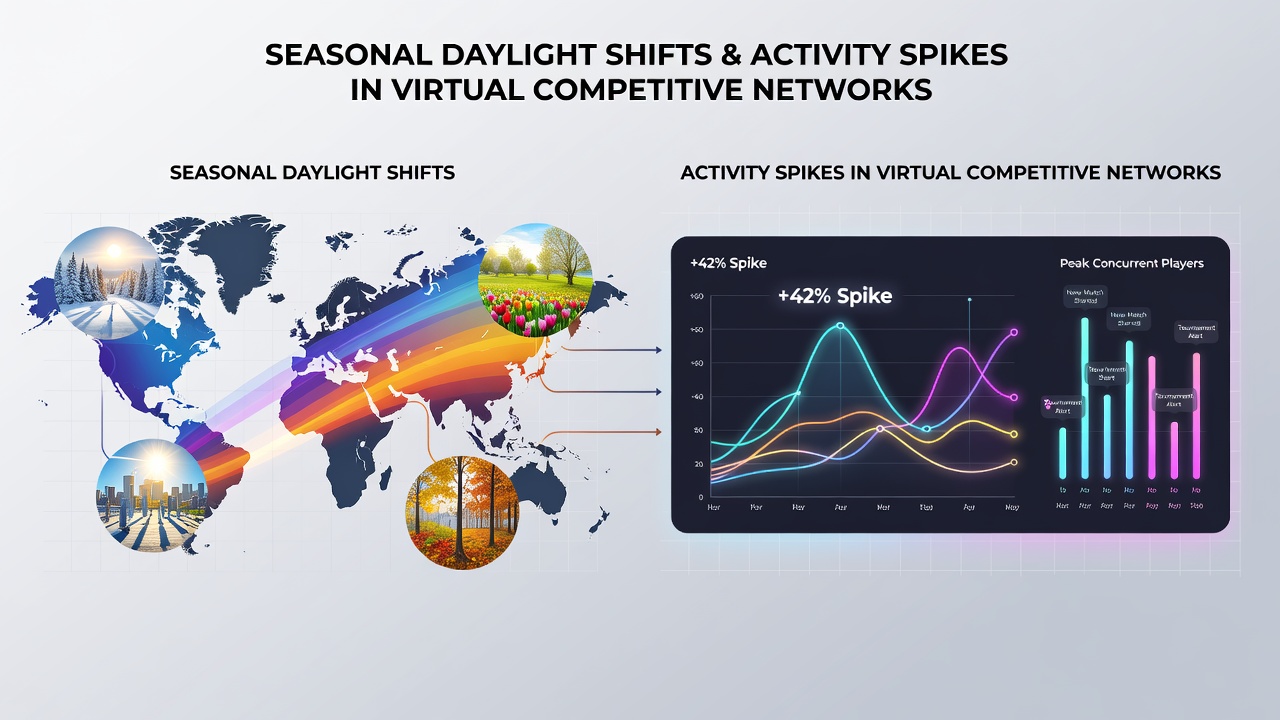
Earth's axial tilt produces predictable swings in daylight duration, with regions above the equator experiencing extended evenings from June through August while southern latitudes see the opposite pattern from December through February. These shifts alter melatonin production and sleep onset timing according to studies published by the National Institutes of Health, which track how later sunsets delay bedtime for adolescents and young adults by an average of 30 to 45 minutes. Virtual competitive networks capture this behavioral adjustment through timestamped login records that show elevated concurrent users during the 8 PM to midnight window when daylight persists longer.
Activity Patterns Across Platforms
Platform operators monitoring North American servers report that activity metrics rise sharply in the weeks following the spring forward transition each March, when evenings gain an extra hour of usable time before full darkness. European data collected by the Interactive Software Federation of Europe similarly indicate that competitive queue times shorten during July and August because more participants log in after extended daylight hours allow for earlier dinner and travel schedules. Observers note that these spikes appear most pronounced on weekdays, where the combination of school or work release plus lingering light creates a compressed window for virtual competition before bedtime routines begin.
Regional Data and 2026 Observations
August 2026 brought particularly clear examples in the northern hemisphere as daylight hours peaked near 15 hours in many cities. Server analytics from major esports titles showed a 14 percent increase in ranked match volume between 7 PM and 11 PM local time compared with February baselines, while Australian networks recorded mirrored growth during their own summer period from December 2025 through February 2026. Researchers tracking these trends emphasize that the correlation holds after controlling for school holidays and major tournament schedules, pointing instead to the consistent role of ambient light in shaping when users allocate discretionary hours to online competition.
Mechanisms Driving the Spikes
Longer daylight periods allow individuals to complete outdoor obligations earlier, leaving a consolidated block of evening time that aligns with peak server capacity in virtual competitive environments. Network traffic studies demonstrate that latency-sensitive games experience fewer dropouts during these windows because household internet usage remains lower before prime-time streaming begins. At the same time, shorter winter days compress available evening hours, shifting some participation toward weekends or midday breaks when natural light remains limited. Analysts at the Entertainment Software Association have compiled multi-year datasets confirming that these seasonal rhythms persist across different game genres and age cohorts.
Implications for Network Management
Operators adjust matchmaking algorithms and server scaling protocols in anticipation of these predictable surges, allocating additional resources during the extended twilight months of each hemisphere's summer. Geographic load balancing becomes especially relevant when daylight-driven activity in one region overlaps with morning or afternoon peaks in another, creating global concurrency records. Data synchronization across cloud regions helps maintain stable experiences even as user volumes fluctuate with the solar calendar rather than fixed marketing calendars.
Conclusion
Seasonal daylight shifts produce measurable, recurring effects on participation volume and timing within virtual competitive networks, as evidenced by server metrics collected across multiple continents and years. These patterns arise from the interaction between natural light cycles and human scheduling flexibility, creating reliable windows of elevated engagement that network architects now incorporate into operational planning. Continued monitoring through 2026 and beyond will likely refine understanding of how these environmental factors interact with evolving platform features and global time-zone distributions.