How Cultural Preferences Shape Payment Method Popularity in International Online Entertainment Platforms
Written by Gisela Perry · Aug 13, 2026
How Cultural Preferences Shape Payment Method Popularity in International Online Entertainment Platforms
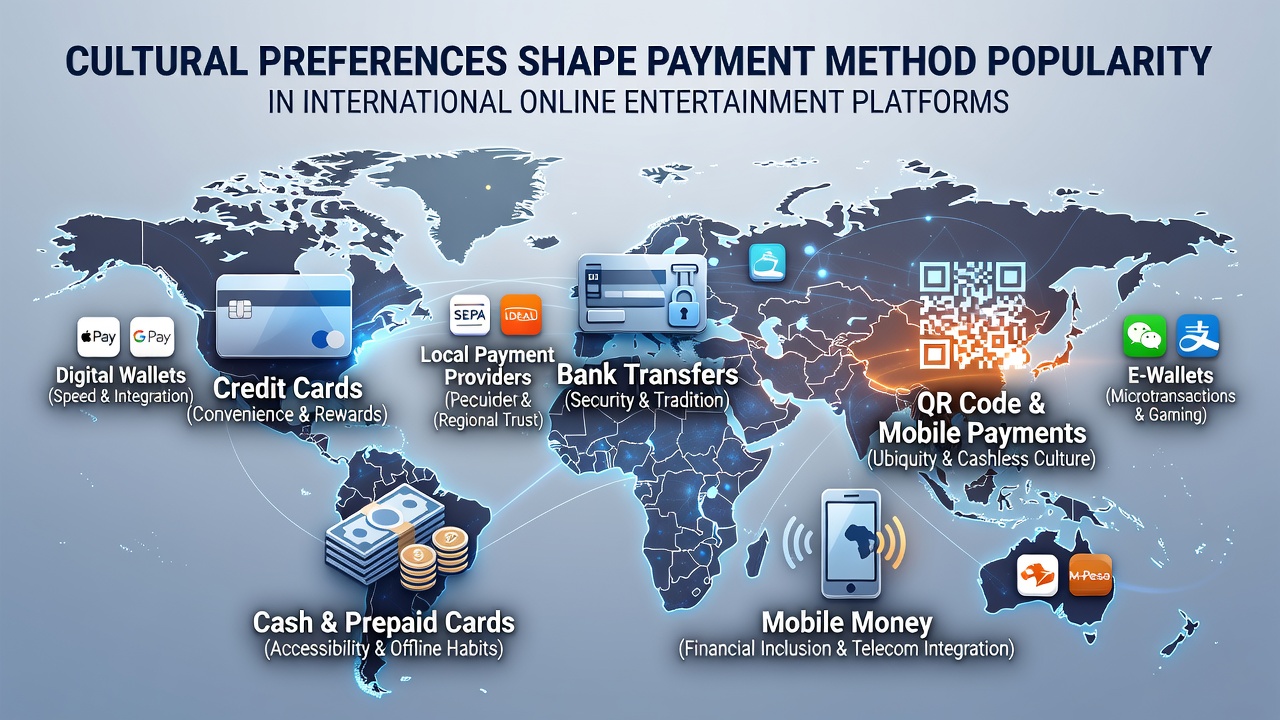
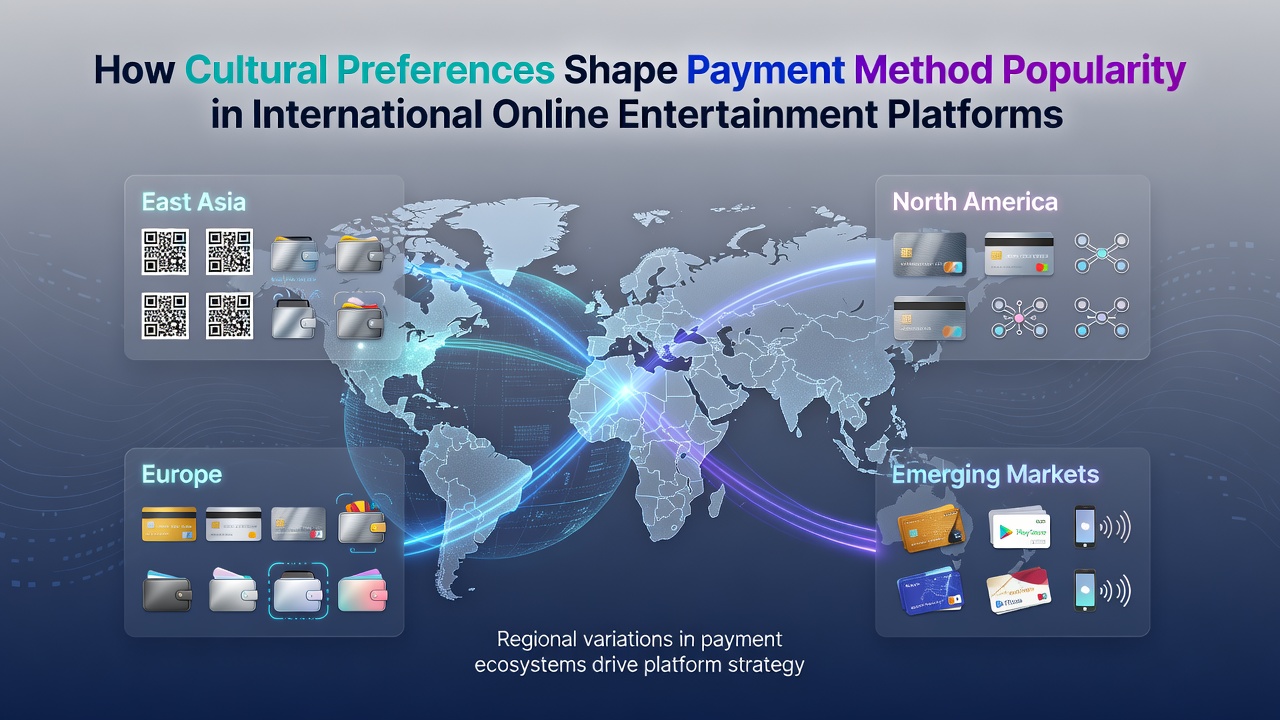
Cultural preferences influence payment method choices across international online entertainment platforms because users gravitate toward systems that align with local trust norms, historical banking habits, and regulatory environments, while data from multiple regions shows distinct patterns emerging by 2026. Observers note that in parts of East Asia platforms report heavy reliance on digital wallets tied to everyday messaging apps, whereas North American users continue to favor established credit card networks for their familiarity and fraud protections. These differences arise from longstanding societal attitudes toward technology adoption and financial privacy, not from platform design alone.
Regional Patterns in Payment Adoption
Experts tracking platform analytics find that Southeast Asian markets demonstrate strong uptake of local e-wallets integrated with ride-hailing and food delivery services, creating seamless deposit flows that feel natural within daily routines. In contrast, European countries maintain higher card usage rates because consumers there have grown accustomed to chip-and-PIN security standards that carry over easily into digital transactions. Latin American platforms see frequent use of bank transfers and prepaid vouchers, reflecting infrastructure limitations in some rural areas and a cultural emphasis on avoiding direct card exposure online.
Research indicates that these regional habits persist even when platforms introduce alternatives, because users prioritize methods they already encounter in offline commerce. Figures from industry reports compiled as of August 2026 reveal that wallet-based deposits account for over sixty percent of activity in key Asian markets, while card transactions dominate roughly seventy percent of volume in select Western European corridors.
Trust, Security, and Social Norms
Those who study cross-border user behavior observe that trust in institutions shapes method selection more than convenience features in many cases. Populations with recent experiences of banking instability often prefer cash-linked or voucher systems that keep funds outside traditional accounts until the moment of transfer. Meanwhile communities accustomed to strong consumer protection laws lean toward card chargeback options, which provide built-in recourse during disputes.
What's interesting is how family and peer influence reinforces these choices. Younger users in high-adoption regions learn platform habits from older relatives who already use the same wallet apps for utility bills and remittances, creating intergenerational consistency that resists platform-driven change. Academic papers examining these loops note that social proof within communities outweighs promotional incentives when users decide which payment option to try first.
Infrastructure and Regulatory Backdrops
Payment popularity also tracks closely with underlying infrastructure development and government policy timelines. Countries that rolled out widespread mobile internet access earlier show faster migration to app-based wallets, whereas regions still expanding broadband coverage retain higher shares of card and bank transfer activity. Regulatory shifts play a documented role too, since licensing requirements in certain jurisdictions mandate support for specific local processors that then gain default status among users.
According to analyses from the Bank for International Settlements, digital payment volumes in emerging markets grew steadily through 2025 and into August 2026, yet the composition of those volumes remained heavily skewed toward regionally dominant providers rather than global card schemes. A separate study published by the Reserve Bank of Australia highlights similar infrastructure-driven divergence in Oceania, where instant bank transfer options gained traction once regulatory frameworks standardized real-time settlement.
Platform Adaptations and Data Trends
International entertainment platforms respond to these patterns by localizing payment gateways rather than pushing uniform solutions. They integrate region-specific processors at signup, display preferred options first based on detected location, and maintain separate compliance teams for each market's reporting rules. Data synchronization across borders remains a technical challenge, but operators that invest in these custom layers report higher completion rates for deposits and withdrawals.
One study revealed that platforms offering at least three culturally aligned methods per major market see measurably shorter average transaction times compared with those relying on a single global provider. Observers note that these adaptations do not eliminate cross-cultural variation; they simply accommodate it so users encounter fewer friction points when moving between platforms.
Conclusion
Cultural preferences continue to dictate payment method popularity on international online entertainment platforms through a combination of historical banking norms, infrastructure realities, and social reinforcement mechanisms. As of August 2026 the patterns remain stable across continents, with wallets leading in parts of Asia, cards holding ground in North America and Europe, and hybrid local options thriving in Latin America and Africa. Platforms that map these preferences accurately maintain smoother user flows, while those that overlook them encounter persistent drop-off at checkout stages. The data shows no single method achieving universal dominance, because local context keeps shaping choices at every step.